Category: Blog

Your blog category

  • AI Predictive Maintenance vs. Reactive Repairs: Why Waiting for Failure is Costing You 42%

    [HERO] AI Predictive Maintenance vs. Reactive Repairs: Why Waiting for Failure is Costing You 42%

    “If it ain’t broke, don’t fix it.”

    In the world of industrial energy management, this is perhaps the most expensive lie ever told. It sounds pragmatic. It sounds like common sense. In reality, it is a financial anchor dragging down your bottom line.

    When a critical pump fails at 3:00 AM on a Tuesday, you aren’t just paying for a repair. You are paying for a ransom. You are paying for emergency contractor fees, overnight shipping on parts that should have been in stock, and: most importantly: the deafening silence of a production line that has ground to a halt.

    Research shows that reactive maintenance costs between 42% and 60% more than a planned intervention. At IQ Energy AI, we’ve seen this play out in real-time across global markets. Waiting for failure isn’t a strategy; it’s a gamble. And the house always wins.

    The $260,000-per-Hour Ransom Note

    Let’s talk numbers. Statistics for industrial operations show that unplanned downtime averages roughly $260,000 per hour. In heavy process industries, that number can skyrocket to over $2 million per hour.

    When you operate under a reactive maintenance model, you are essentially letting your equipment decide your schedule. Your machines don’t care about your quarterly targets or your weekend plans. They fail when they are pushed too hard, and they fail in ways that maximize disruption.

    A scheduled repair is a surgical strike. It’s fast, it’s controlled, and it costs 3 to 4 times less than an emergency fix. When you wait for the “bang,” you lose control. You lose money. You lose sleep.

    AI-powered digital mesh monitoring an industrial turbine to prevent expensive machine failure.

    The 42% Tax on Ignorance

    Why is reactive maintenance so much more expensive? It’s the “hidden” costs that get you.

    1. Labor Premiums: Emergency repairs require technicians to work overtime. You’re paying 1.5x to 2x the standard rate for the same set of hands.
    2. Logistics Nightmares: Parts are ordered with “Next Day Air” labels. You are paying for the speed of the plane, not just the quality of the gear.
    3. Collateral Damage: Machines rarely fail in a vacuum. A bearing failure that could have been fixed for $500 can easily cascade into a shaft misalignment or a motor burnout that costs $50,000.
    4. Energy Inefficiency: Before a machine fails, it struggles. It draws more power. It runs hotter. It vibrates. A machine on the verge of breakdown is an energy vampire, sucking your profits long before it finally dies.

    By shifting to a predictive model, you aren’t just preventing a breakdown; you are eliminating the “failure tax.”

    IQ Energy AI: The 99.2% Advantage

    Predictive maintenance is only as good as the data behind it. If your sensors are crying wolf every five minutes, your team will eventually ignore them. This is where IQ Energy AI changes the game.

    Our platform doesn’t just guess. We deliver a 99.2% prediction accuracy.

    We achieve this by moving beyond simple threshold alerts. Most legacy systems tell you when a machine is hot. We tell you when a machine is becoming hot in a way that deviates from its digital twin’s optimal performance profile. We look for the “fingerprints” of failure weeks before they manifest as smoke or noise.

    The result? A 73% reduction in downtime. Imagine reclaiming nearly three-quarters of the time your plant currently spends sitting idle. That isn’t just an incremental improvement; it’s a total transformation of your operational efficiency.

    Visualized energy flow and data optimization for industrial efficiency in a high-tech facility.

    The Global Pressure Cooker: US and European Markets

    If the financial incentive isn’t enough to move the needle, the regulatory environment will be.

    In Europe, the European Green Deal is no longer a set of “nice-to-have” suggestions. It is a roadmap for mandatory industrial efficiency. Energy waste is being taxed, regulated, and scrutinized. If your plant is running inefficiently because of poorly maintained assets, you are literally leaking money into the hands of regulators.

    Similarly, the adoption of ISO 50001 standards has become a benchmark for excellence in both the US and Europe. ISO 50001 requires organizations to establish systems and processes to improve energy performance. You cannot manage what you do not measure, and you certainly cannot optimize what you do not predict.

    IQ Energy AI provides the data backbone needed to satisfy these rigorous standards. By maintaining assets at peak performance, you reduce your carbon footprint and ensure your energy consumption remains within the strict limits defined by modern environmental policy.

    Why “Predictive” is the New “Pragmatic”

    I’ve spent years looking at factory floors, and I can tell you this: the busiest maintenance teams are often the least efficient. They are the ones constantly “putting out fires.” They wear their exhaustion as a badge of honor.

    But the most profitable plants? They are quiet.

    In a predictive environment, there are no fires to put out. There are only scheduled tasks.

    • Monday 9:00 AM: AI flags a vibration anomaly in Pump 4.
    • Wednesday 2:00 PM: During a scheduled shift change, a technician spends 20 minutes replacing a $40 seal.
    • Thursday: Production continues at 100% capacity.

    That is the power of a 99.2% accuracy rate. It turns chaos into a calendar. It turns a $260,000-per-hour disaster into a routine maintenance ticket.

    Digital twin holographic blueprint of an industrial pump for high-accuracy predictive maintenance.

    Calculating the ROI: It’s Not Just About Savings

    Many COOs ask me about the “cost” of implementing AI. I tell them to look at the “cost” of not implementing it.

    The U.S. Department of Energy notes that predictive maintenance can yield a 10x return on investment. For a facility with a $10 million asset base, moving from reactive to predictive can save upwards of $350,000 annually in pure maintenance costs: not even counting the reclaimed production revenue.

    At IQ Energy AI, we focus on Asset Performance Optimization. We aren’t just helping you fix things; we are helping you run better.

    Check out our case studies to see how we’ve helped industrial leaders stop the bleeding. The data is clear: companies that embrace AI-driven maintenance see a 20-25% boost in total production.

    The Uncomfortable Truth

    The truth is that most industrial leaders are afraid of the complexity of AI. They think it requires a PhD to run or a total overhaul of their existing infrastructure.

    It doesn’t.

    Our system is designed to integrate with your current setup. It’s about layering intelligence over your existing hardware. You don’t need to replace your machines; you just need to start listening to them.

    Waiting for a machine to fail is like waiting for your car’s engine to explode before you change the oil. It’s not “saving money.” It’s deferred disaster.

    Data visualization showing the shift from chaotic reactive repairs to organized AI maintenance.

    Take Control of Your Energy Future

    The 42% price tag on reactive repairs is a choice. You can choose to pay it, or you can choose to invest in a system that pays you back.

    With 99.2% accuracy and a 73% reduction in downtime, IQ Energy AI is the tool that moves your operation from the 20th century into the 21st. The European Green Deal is coming. ISO 50001 is the new standard. Your competitors are already looking at their data.

    Are you ready to stop reacting and start predicting?

    Visit our demo page to see how we can transform your maintenance strategy from a cost center into a competitive advantage. Or, if you’re ready to dive into the technical details, explore our documentation.

    The machines are talking. It’s time you started listening.

  • Energy Optimization Software Vs. Manual Tuning: Which Is Better For Your Asset Performance?

    [HERO] Energy Optimization Software Vs. Manual Tuning: Which Is Better For Your Asset Performance?

    Your best engineer is holding your plant back.

    It sounds harsh, but it is the reality of modern industrial operations. Not because they lack skill, but because they are human. They sleep. They take lunch breaks. They can only process a fraction of the data your machines generate every second. Relying on manual tuning for energy optimization is like trying to win a Formula 1 race with a horse and buggy. You might get to the finish line, but you’ll be laps behind the competition.

    In the world of asset performance, “good enough” is a dangerous mindset. If you aren’t optimizing in real-time, you are losing money. It is that simple.

    The Myth of the “Golden Touch”

    For decades, industrial plants relied on the “Golden Touch”, that one senior operator who knew exactly which knob to turn or which valve to adjust by the sound of the machine. It worked for the 20th century. It doesn’t work now.

    Manual tuning is fundamentally reactive. You notice a spike in energy costs at the end of the month. You see a temperature drift on a dashboard. You respond. But by the time a human reacts, the inefficiency has already lived in your system for hours, days, or weeks.

    The research is clear: manual monitoring is prone to inefficiencies from incomplete or outdated data. While a skilled engineer might spend 5 to 7 hours a month just on manual procurement and monitoring, they are still only seeing a snapshot in time. They are looking in the rearview mirror while driving at full speed.

    A hand interacting with a digital interface for industrial manual tuning and energy monitoring.

    Why Manual Tuning Fails in the Modern Era

    Manual tuning relies on human intervention to adjust parameters like flow rates, temperatures, and pressures. Here is why it consistently underperforms compared to automated software:

    1. Human Error: Even the most diligent operator has bad days. Fatigue, distraction, and subjective judgment lead to inconsistent performance.
    2. Slow Reaction Speeds: Industrial systems are dynamic. A cloud passing over a solar array or a slight drop in ambient humidity can change the energy requirements of a chiller plant. A human cannot process these variables and adjust settings instantly.
    3. The Dead-Time Problem: Many systems have significant lag between a change in settings and a change in output. Humans often over-correct, leading to “hunting” or oscillation, which wears down assets and wastes energy.
    4. Data Overload: Modern facilities generate thousands of data points every minute. Expecting a person to find the signal in that noise is not just unfair; it’s impossible.

    The Shift to Automated Optimization

    Enter Energy Optimization Software. This isn’t just a fancy dashboard that shows you what happened yesterday. It is an active participant in your operations.

    At IQ Energy AI, we don’t just monitor; we predict and act. Our platform operates with a 99.2% prediction accuracy. Think about that number. It means we know what your energy needs will be before they happen. While your team is reacting to a surge, our AI has already adjusted the load to compensate.

    This shift from reactive to proactive management is where the real money is made.

    The Stats That Matter

    When we talk about asset performance, we aren’t just talking about keeping the lights on. We are talking about the bottom line. Our clients typically see:

    • Up to 42% cost savings: By optimizing load distribution and eliminating waste that manual tuning simply misses.
    • 73% reduction in downtime: Because the AI identifies mechanical stress and thermal imbalances long before they lead to a breakdown.

    If you want to see how these numbers apply to your specific industry, check out our case studies.

    Industrial pump optimized with AI energy management software and real-time performance data.

    24/7 AI Monitoring: The Game Changer

    The biggest differentiator between manual tuning and IQ Energy AI is the concept of “unblinking” oversight.

    Manual tuning happens in shifts. Even with a 24/7 crew, handovers occur. Priorities shift. Urgent repairs pull staff away from optimization tasks. In those gaps, efficiency drops.

    IQ Energy AI provides 24/7 monitoring that never blinks. It treats 3:00 AM on a Sunday with the same analytical rigor as 10:00 AM on a Tuesday. This continuous market scanning and automated alerting system ensure that your assets are always running at their “Goldilocks” zone, the perfect balance of performance and energy consumption.

    This level of consistency is impossible for a human team to replicate. It transforms your energy management from a line item expense into a competitive advantage.

    When Do You Actually Need a Human?

    We are often asked: “Is there any place left for manual tuning?”

    The answer is yes, but the role has changed. Manual expertise is now for the outliers. Research suggests that for complex temperature control loops or systems with non-standard characteristics, a human touch might still be needed to troubleshoot errors or calibrate the initial AI framework.

    Think of it this way: the AI is the autopilot that handles 99% of the flight with precision no human can match. The human is the captain who steps in only when something truly extraordinary occurs.

    By offloading the “boring” task of constant optimization to IQ Energy AI, you free up your most talented engineers to focus on high-level strategy, security, and long-term asset health.

    A glowing digital core representing 24/7 automated energy optimization and AI monitoring.

    The Cost of Staying Manual

    If you are still relying on manual tuning, you are paying a “hidden tax.”

    This tax is composed of the 42% extra energy cost you are likely paying and the 73% of downtime that could have been avoided. It is also the cost of talent. Your engineers are too valuable to be spent staring at gauges and tweaking valves.

    In a world where margins are thinning and sustainability mandates are tightening, manual tuning is a liability. Automated software provides the data-driven foundation required to meet legal and compliance standards while staying profitable.

    Moving Toward Data-Driven Performance

    Transitioning from manual to automated isn’t just about software; it’s about a mindset shift. It’s about trusting the data.

    When you have a system that offers 99.2% accuracy, the “gut feeling” of an operator becomes obsolete. You no longer have to guess why your energy bill spiked last quarter. You can see the exact moment, the exact asset, and the exact reason: and more importantly, the AI likely already fixed it.

    If you’re ready to stop reacting and start optimizing, the path is clear. You can explore our documentation to see how the integration works or jump straight to a demo to see the AI in action.

    An engineer overseeing a digital twin of an industrial plant for asset performance optimization.

    The Verdict

    So, which is better for asset performance?

    Manual tuning is reactive, slow, and expensive. Energy Optimization Software is proactive, instant, and delivers massive ROI.

    The choice isn’t really a choice at all. It’s an evolution. The question isn’t whether you will move to AI-driven energy management, but whether you will do it before or after your competitors.

    Don’t let your assets underperform because of human limitations. Give them the 24/7 precision they deserve.

    If you have questions about how this fits into your current setup, our team is always here to help. Reach out via our support page or contact us directly to start the conversation.

    The future of energy is automated. Is your facility ready?

  • Why AI Predictive Maintenance Will Change the Way You Think About Downtime

    [HERO] Why AI Predictive Maintenance Will Change the Way You Think About Downtime

    Downtime is not an act of God. It is not a tax you owe to the universe for the privilege of running a factory, a power plant, or a commercial facility. For decades, maintenance teams have treated equipment failure as an inevitable tragedy, something to be mourned with overtime pay and frantic calls to parts suppliers.

    I’m here to tell you that’s a lie.

    At IQ Energy AI, we see downtime differently. We see it as a controllable variable. If you’re still operating on the “if it ain’t broke, don’t fix it” or the “fix it every six months regardless” mindset, you aren’t just behind the curve. You’re bleeding capital.

    AI predictive maintenance isn’t a buzzword; it’s the end of the “unavoidable” crisis.

    The Cult of the Calendar

    Most maintenance schedules are built on guesses. We call it “preventative maintenance,” which sounds responsible. In reality, it’s often just a waste of perfectly good components. You replace a bearing because the manual says it’s time, not because the bearing is actually failing. Or worse, the bearing fails two weeks before the scheduled check, and everything grinds to a halt anyway.

    This is the “Calendar Cult.” It’s rigid, expensive, and surprisingly ineffective.

    When you shift to ai predictive maintenance, you stop guessing. You start knowing. Instead of looking at a calendar, you look at data.

    Digital data flow replacing a calendar for AI predictive maintenance and equipment failure prediction.

    Your Machines Are Screaming (You Just Can’t Hear Them)

    Every piece of rotating equipment, every transformer, and every HVAC system has a signature. When things start to go south, that signature changes. It might be a microscopic shift in vibration, a tiny spike in heat, or a subtle change in energy draw.

    Human ears can’t pick this up. Standard sensors might catch it when it’s already too late. But AI? AI lives for these patterns.

    Our system provides 24/7 AI Monitoring. It doesn’t take lunch breaks. It doesn’t get tired at 3:00 AM. It listens to your assets constantly, identifying the “hidden patterns” of impending failure long before they manifest as smoke or sparks.

    This is the core of equipment failure prediction. It’s about catching the whisper so you don’t have to deal with the scream.

    The IQ Energy AI Difference: By the Numbers

    I’m a COO. I know that “innovation” doesn’t mean anything if it doesn’t show up on the P&L statement. We didn’t build IQ Energy AI to be a cool science project. We built it to be a hammer.

    Here is the reality of what happens when you plug our intelligence into your operations:

    • 99.2% Prediction Accuracy: Our algorithms don’t do “maybe.” We provide a level of precision that allows you to trust the data and make bold operational decisions.
    • 73% Reduction in Downtime: Imagine reclaiming nearly three-quarters of the time your machines currently spend sitting idle and broken. That’s not a marginal gain; that’s a total transformation of your production capacity.
    • 42% Cost Reduction: Maintenance is expensive. Emergency maintenance is astronomical. By moving to a predictive model, you slash the need for rush-ordered parts and emergency labor.

    When you see a 73% reduction in downtime, you stop thinking about “maintenance” as a cost center. You start seeing it as a competitive advantage.

    Turning Crisis into a Scheduled Coffee Break

    The magic of asset performance optimization is in the scheduling.

    In the old world, a pump fails at 11:00 PM on a Tuesday. You spend the night scrambling, paying 2x labor rates, and losing six hours of production.

    In the AI world, we tell you on Friday morning that the pump’s internal harmonics indicate a 90% chance of failure within the next 10 days. You don’t panic. You look at your production schedule, see a gap on Sunday afternoon, and send a technician in then.

    The part is replaced in an hour. No production is lost. No one’s sleep is ruined.

    Downtime changed from a crisis into a managed, boring event. And in industrial operations, “boring” is beautiful.

    Calm industrial maintenance scene with a turbine health overlay showing asset performance optimization.

    Energy Optimization: The Hidden Benefit

    Most people think of predictive maintenance solely in terms of “breaking.” But there’s a middle ground between “perfect” and “broken” where a lot of money is lost.

    A machine that is starting to fail is often an energy hog. Misaligned shafts, clogged filters, and worn-out seals all force your equipment to work harder. They pull more amps. They waste more heat.

    By using energy optimization software integrated with AI maintenance, you’re not just preventing a crash. You’re ensuring your equipment runs at peak efficiency. You aren’t just saving on repair costs; you’re lowering your monthly utility bill.

    It’s a double win that most traditional maintenance managers completely overlook.

    Why Now?

    You might be thinking, “We’ve survived this long without it. Why change?”

    Because your competitors are changing. The “uncomfortable truth” is that the margin for error in industrial energy management is shrinking. Labor is more expensive. Energy prices are volatile. Supply chains for replacement parts are no longer a guarantee.

    You can no longer afford the luxury of unexpected failures.

    High-tech factory floor with synchronized equipment managed by energy optimization software.

    Implementing the Strategy

    How do you move from a reactive posture to a predictive one? It isn’t as daunting as it sounds. You don’t need to rip and replace your entire infrastructure.

    1. Deploy Sensors: We leverage your existing data streams or add non-invasive IoT sensors where needed.
    2. Connect to the IQ Energy AI Platform: Our AI begins baselining your “normal” operations immediately.
    3. Monitor and Predict: Within a short window, the system begins identifying anomalies.
    4. Actionable Insights: You don’t get a spreadsheet of raw numbers. You get a clear alert: “Machine A is showing signs of bearing wear. Schedule maintenance within 14 days to avoid failure.”

    It’s about giving your team a “boots-on-the-ground” perspective backed by world-class data science.

    The Psychological Shift

    The biggest hurdle isn’t the technology. It’s the mindset.

    We are conditioned to think of machines as things that eventually break, and there’s nothing we can do about it. We’ve accepted the “unavoidable cost of doing business” for so long that we’ve grown blind to the alternative.

    AI predictive maintenance is the cure for that blindness. It shifts the power dynamic. You are no longer at the mercy of your equipment. You are the one in control.

    When you realize that downtime is a choice, your entire strategy changes. You stop playing defense. You start playing offense.

    Human operator using AI predictive maintenance software to monitor equipment health and performance.

    Final Thoughts

    At IQ Energy AI, we aren’t just selling software. We’re selling certainty.

    With 99.2% accuracy, the “what ifs” that keep COOs and Plant Managers awake at night start to disappear. You can plan your budget, your labor, and your output with a level of confidence that was previously impossible.

    Downtime is a relic of the past. It’s time to leave it there.

    Ready to see how your facility can achieve a 73% reduction in downtime? Book a demo today and let’s look at the data together. Or, if you want to see how we’ve done this for others in your sector, check out our industries page.

    The era of the “unavoidable” breakdown is over. Welcome to the era of intelligence.

  • Equipment Failure Prediction Secrets Revealed: How to Move from Alerts to Action

    [HERO] Equipment Failure Prediction Secrets Revealed: How to Move from Alerts to Action

    Most maintenance teams are drowning in data but starving for insight. They are surrounded by sensors screaming for attention, dashboards flashing red, and a never-ending stream of “high-priority” alerts that often lead nowhere. This is the paradox of modern industrial operations: the more we monitor, the less we seem to know what to actually do.

    If your facility is still operating on a “catch-it-before-it-breaks” mentality based on vague notifications, you aren’t doing ai predictive maintenance. You are just doing digital firefighting.

    The secret to true asset performance optimization isn’t more data. It is the transition from noise to action. At IQ Energy AI, we’ve refined this transition into a science. We don’t just tell you something is wrong; we tell you exactly what to fix, when to fix it, and how much money you’ll save by doing so.

    Here is the blueprint for moving from alert fatigue to operational mastery.

    The Myth of the “Good Enough” Alert

    Industry standards for equipment failure prediction are surprisingly low. Many systems boast a 70% or 80% accuracy rate. In a lab, that looks like a passing grade. On a factory floor, that is a disaster.

    A 20% false-alarm rate means your team spends one out of every five days chasing ghosts. Eventually, they stop trusting the system. They start ignoring the alerts. And that is exactly when a critical pump fails, taking your entire production line down with it.

    We decided “good enough” wasn’t an option. Our platform delivers a 99.2% prediction accuracy. This isn’t a vanity metric. It is the difference between a system that works and a system that gets ignored. When IQ Energy AI sends an alert, our users know it’s real.

    Industrial turbine with digital overlay showing high-accuracy equipment failure prediction.

    Secret #1: The Context is the Catalyst

    Raw vibration data is useless in a vacuum. A motor vibrating at 4mm/s might be a crisis in a precision textile mill, but perfectly normal for a heavy-duty rock crusher.

    The first secret to high-accuracy equipment failure prediction is contextual intelligence. Our AI doesn’t just look at the sensor; it looks at the asset’s history, its load patterns, and its relationship to the surrounding environment.

    By feeding real-time data into a “single source of truth,” we eliminate the silos that cause false positives. We correlate energy consumption spikes with thermal anomalies. If a bearing is overheating while energy draw is plummeting, the AI knows it’s not just a heavy load: it’s an imminent mechanical failure.

    Secret #2: Move from Predictive to Prescriptive

    Predictive maintenance tells you: “This machine will fail in 72 hours.”
    Prescriptive maintenance tells you: “The third drive belt is fraying. Replace it during the shift change at 2:00 PM to avoid a $50,000 outage.”

    This is the core of our philosophy. Moving to action requires prescriptive analytics. It’s about taking that 99.2% accuracy and turning it into a work order.

    When you integrate predictive insights directly into your Computerized Maintenance Management System (CMMS), the AI does the heavy lifting of scheduling. It optimizes for the lowest impact on production. This shift is how our clients achieve a 42% cost reduction in maintenance spend. You stop over-maintaining healthy machines and start surgically repairing the ones that actually need it.

    Robotic arm performing prescriptive maintenance to achieve industrial cost reduction.

    Secret #3: Eliminate the “Alert Gap” with Real-Time Dashboards

    The “Alert Gap” is the time between a system detecting a problem and a human being deciding what to do about it. In many plants, this gap is measured in hours or even days.

    To close this gap, you need more than just an email notification. You need a centralized dashboard that visualizes the health of every asset in real-time. Our platform transforms complex sensor data into intuitive health scores.

    • Green: Optimal performance.
    • Yellow: Early degradation: schedule inspection within 14 days.
    • Red: Critical failure imminent: take action now.

    By simplifying the decision-making process, we empower facility managers to act with confidence. They no longer need to be data scientists to understand what their machines are saying.

    Slashing Downtime by 73%: A Real-World Reality

    Downtime is the ultimate profit killer. It’s not just the cost of the repair; it’s the lost revenue, the idle labor, and the missed delivery deadlines.

    The secret to our 73% reduction in downtime lies in condition-based triggers. Traditional maintenance is calendar-based. You change the oil every six months because the manual says so. But what if the oil is still perfect at six months? You’ve wasted time and resources. What if it’s contaminated at four months? You’ve risked a catastrophic failure.

    With IQ Energy AI, the machine tells you when it needs service. We move the intervention point to the exact “sweet spot”: late enough to maximize the life of the component, but early enough to prevent any secondary damage.

    For a deep dive into how this works across different sectors, check out The Ultimate Guide to AI Predictive Maintenance.

    Digital command center displaying real-time asset performance optimization data.

    The Role of Historical Trend Analysis

    You cannot predict the future if you don’t understand the past. High-accuracy AI models require a feedback loop. Every time a technician performs a repair based on an AI insight, that data is fed back into the system.

    Did the technician find what the AI predicted? If so, the model is reinforced. If the issue was slightly different, the model learns. This continuous evolution is why our accuracy remains industry-leading. We aren’t just using a static algorithm; we are using a living digital twin of your facility that gets smarter every single day.

    This historical data also reveals “bad actors”: specific pieces of equipment or brands that fail more frequently than others. This allows for smarter procurement and long-term asset performance optimization.

    Integration: The Final Frontier

    Moving from alerts to action requires a tech stack that talks to itself. If your AI prediction software is isolated from your energy management system and your ERP, you are missing the big picture.

    True ai predictive maintenance involves:

    1. Sensor Integration: Vibration, thermal, acoustic, and electrical data.
    2. Operational Integration: Scada and PLC data to understand the “why” behind the “what.”
    3. Business Integration: Pricing and production schedules to determine the best time for intervention.

    When these three pillars align, maintenance stops being a “cost center” and starts being a competitive advantage. You can see this in action in our case studies.

    Interconnected digital data threads representing integrated industrial predictive maintenance.

    Stop Guessing. Start Acting.

    The “secrets” to equipment failure prediction aren’t actually secrets: they are the result of rigorous data science applied to real-world industrial problems.

    The choice is simple. You can continue to manage by “gut feeling” and reactive alerts, or you can embrace a system that provides:

    • 99.2% Accuracy: No more chasing ghosts.
    • 42% Cost Reduction: Stop wasting money on unnecessary parts and labor.
    • 73% Less Downtime: Keep your lines running and your customers happy.

    The era of the “dumb” alert is over. It’s time to move to actionable intelligence.

    Are you ready to see what your facility is actually capable of? Book a demo today and let’s turn your data into your most valuable asset.

  • Why an Industrial Energy Management System Will Change the Way You Hit Sustainability Goals

    [HERO] Why an Industrial Energy Management System Will Change the Way You Hit Sustainability Goals

    Most industrial sustainability targets are fictional.

    They are born in boardrooms, written into annual reports, and then promptly ignored by the people actually running the plant floor. Why? Because there is a massive disconnect between high-level “Net Zero” ambitions and the daily reality of vibrating motors, aging pumps, and surging electricity bills.

    If you cannot measure your energy waste in real-time, you cannot manage it. If you cannot predict when a machine is about to fail, you cannot optimize its consumption. This is where a modern industrial energy management system stops being a “nice-to-have” and starts being the only way to survive a carbon-constrained economy.

    At IQ Energy AI, we see this gap every day. Companies want to be green, but they also need to stay profitable. The good news is that these two goals are no longer mutually exclusive.

    The Death of the Spreadsheet Era

    For decades, energy management meant looking at a utility bill once a month and wondering why the “Peak Demand” charge was so high. Some forward-thinking companies moved to ISO 50001 standards, tracking data in complex spreadsheets.

    But spreadsheets are reactive. They tell you what happened thirty days ago. They don’t tell you that a cooling pump is currently drawing 20% more power than it should because a bearing is starting to seize.

    An ai energy management platform changes the cadence of decision-making. It moves you from “What happened?” to “What is happening now?” and, most importantly, “What will happen next?”

    AI energy management dashboard visualizing real-time factory data and predictive analytics for sustainability.

    Accuracy is the Only Currency That Matters

    In the world of industrial AI, “close enough” isn’t good enough. If your software throws false positives every time a motor cycles on, your team will eventually turn the alerts off. This is “alarm fatigue,” and it’s the silent killer of digital transformation.

    This is why we focus on precision. Our system delivers 99.2% prediction accuracy.

    When the system flags an anomaly in your energy consumption or equipment behavior, it isn’t a guess. It’s a data-driven certainty. This level of accuracy allows plant managers to move from reactive firefighting to strategic execution. You aren’t just “trying” to hit sustainability goals; you are executing a plan based on hard evidence.

    Sustainability Through Efficiency: The 42% Factor

    There is a common misconception that “going green” requires massive capital expenditure on solar panels or carbon offsets. While those have their place, the fastest and cheapest way to hit sustainability goals is to stop wasting the energy you are already buying.

    Industrial waste is often invisible. It lives in:

    • Reactive Power: Inefficient motors pulling more current than they use.
    • Peak Demand Surges: Starting all heavy machinery simultaneously.
    • Mechanical Friction: Machines working harder, and using more energy, to overcome internal wear.

    By using energy optimization software, our clients have seen up to a 42% cost reduction. That is not a marginal gain. That is a transformative shift in the bottom line. When you reduce your energy bill by nearly half, your carbon footprint follows the same trajectory. Efficiency is the purest form of sustainability.

    Industrial turbine showing efficiency paths optimized by energy optimization software to reduce waste.

    Why Maintenance is the Secret Weapon of Energy Management

    You cannot separate energy management from equipment health.

    A pump that is misaligned or poorly lubricated is an energy vampire. It might continue to run for weeks before failing, but during those weeks, its energy consumption will spike. If you only look at energy and ignore the machine, you miss the “Why.” If you only look at the machine and ignore the energy, you miss the “How much.”

    This is where the integration of predictive maintenance becomes critical. Our platform identifies these hidden patterns. By catching these issues early, we achieve 73% less downtime.

    Think about the sustainability impact of that. Less downtime means:

    1. Reduced Waste: No scrapped batches due to sudden machine failure.
    2. Resource Optimization: Fewer replacement parts manufactured, shipped, and installed.
    3. Process Stability: Machines running at their “sweet spot” of efficiency for longer periods.

    From Alerts to Action: How the System Works

    An effective industrial energy management system acts as a central nervous system for your facility. It doesn’t just collect data; it interprets it.

    1. Real-Time Visibility

    The system monitors energy flow across every asset. You see exactly where every kilowatt is going. This transparency usually reveals “low-hanging fruit”: machines left running during shift changes or cooling systems set to aggressive levels that don’t match the actual load.

    2. Anomaly Detection

    Using AI, the system establishes a “baseline” of normal operation. When consumption deviates: even slightly: the AI analyzes the signature of that deviation. It can distinguish between a legitimate production ramp-up and a mechanical fault.

    3. Predictive Insights

    This is the “AI” in ai energy management. The system forecasts future energy needs and potential failure points. This allows you to schedule maintenance during planned outages rather than reacting to a catastrophic breakdown at 3 AM.

    A digital factory network highlighting anomaly detection within an industrial energy management system.

    Bridging the Gap to Net Zero

    The path to Net Zero is paved with data. Regulatory bodies and stakeholders are demanding more transparency than ever. “Greenwashing” is being replaced by mandatory reporting.

    Using a robust platform allows you to automate this reporting. You can prove your energy reductions with audited data. You can show exactly how much CO2 was avoided by optimizing your compressed air system or upgrading your HVAC controls.

    But beyond the reporting, it gives you the confidence to set more ambitious goals. When you know you have a system that offers 99.2% accuracy, you aren’t afraid of aggressive sustainability targets. You have the tools to hit them.

    The Economic Reality

    Let’s be blunt: Sustainability goals that hurt the company’s financial health are rarely sustained.

    The beauty of an industrial energy management system is that the ROI is immediate and measurable. You are not spending money to “be good”; you are investing in a system that pays for itself through energy savings and reduced maintenance costs.

    When you see a 42% cost reduction, the project stops being a “sustainability initiative” and becomes a “core business strategy.” It just happens to be a strategy that is great for the planet.

    Modern sustainable industrial park using an industrial energy management system to hit net zero goals.

    Moving Forward

    The industrial landscape is changing. Energy prices are volatile, and carbon taxes are becoming a reality. The companies that thrive will be those that treat energy as a controllable variable rather than a fixed overhead.

    If you are still relying on manual checks and monthly bills, you are flying blind. It is time to bring AI into the boiler room and the factory floor.

    The technology exists. The data is there. The only question is whether you will use it to hit your goals or watch your competitors hit theirs.

    Ready to see how your facility can achieve these results? Explore our case studies to see how we’ve helped other industrial leaders turn energy data into a competitive advantage. Or, if you’re ready to take the next step, book a demo and see the power of 99.2% accuracy for yourself.

  • The Ultimate Guide to AI Predictive Maintenance: Everything You Need to Succeed in 2026

    [HERO] The Ultimate Guide to AI Predictive Maintenance: Everything You Need to Succeed in 2026

    Your maintenance schedule is likely a work of fiction.

    Most industrial operations still rely on calendar-based checklists or, worse, the “run-to-fail” method. It’s expensive. It’s inefficient. And in 2026, it is completely unnecessary.

    I’ve spent years watching operations managers scramble when a critical pump fails at 3:00 AM. They lose revenue, they lose sleep, and they waste energy. AI predictive maintenance has changed the game from guessing to knowing. It isn’t just about avoiding a breakdown anymore; it is about total asset performance and energy optimization.

    In this guide, I’ll break down exactly what you need to master this technology this year. We’re moving past simple alerts into the era of Agentic AI: systems that don’t just tell you there’s a problem, but help you solve it.

    The Shift: Why 2026 is Different

    For years, predictive maintenance was a “nice-to-have” pilot project. Today, it’s a survival requirement. The global energy landscape is volatile. Carbon taxes are rising. Equipment lead times are still unpredictable.

    The biggest shift we’re seeing in 2026 is the transition from Condition Monitoring to Prescriptive Action.

    In the past, a sensor might tell you a bearing was running hot. You’d get an alert, and then a human would have to decide what to do. Today, the IQ Energy AI platform uses Agentic AI to diagnose the root cause, calculate the remaining useful life (RUL), and suggest the exact window for repair that minimizes both downtime and energy waste.

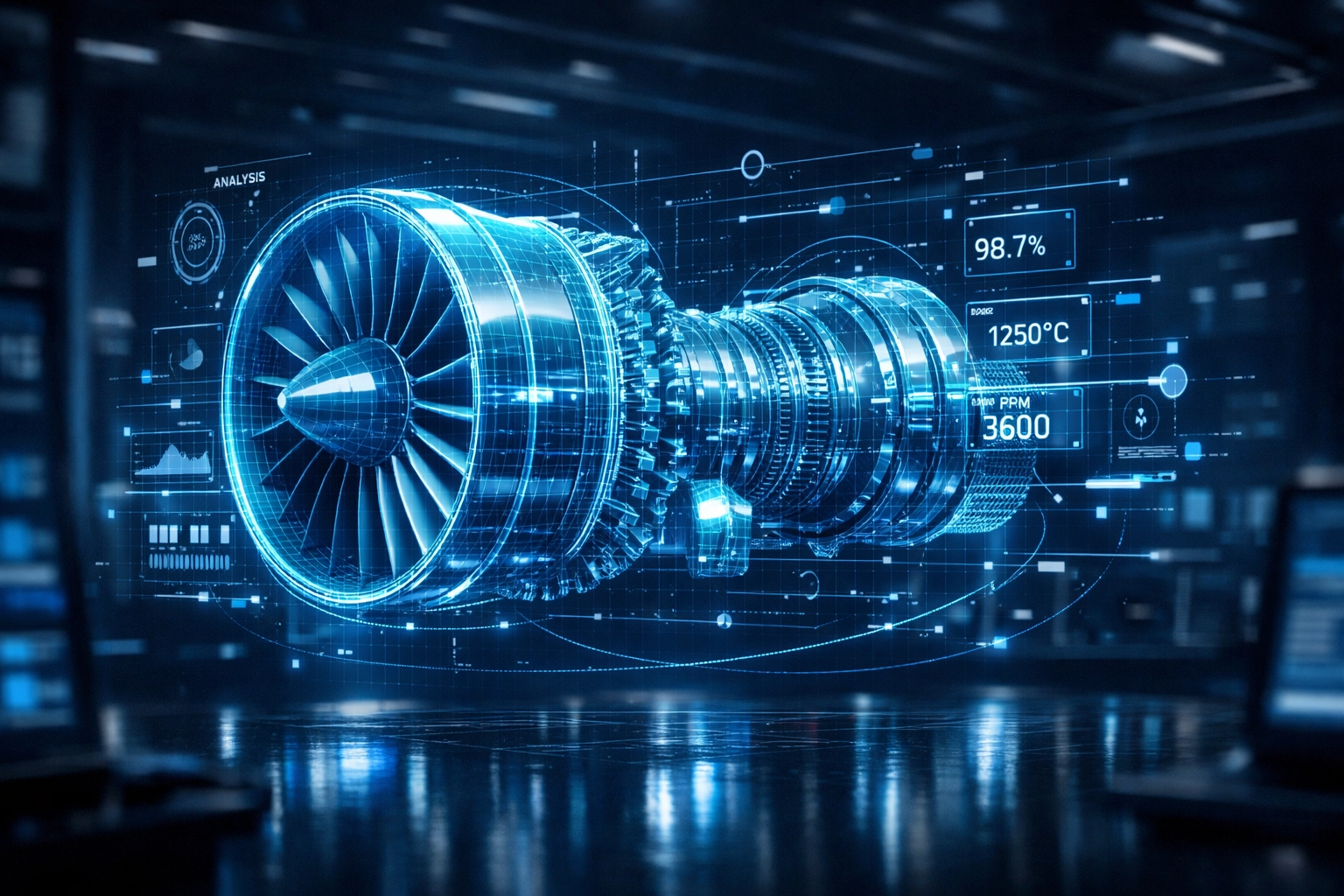
    Holographic industrial turbine representing AI diagnostic analysis and predictive maintenance for maximized uptime.

    The “Uncomfortable Truth” of Legacy Maintenance

    Preventive maintenance is often just “planned waste.” Replacing a part because the manual says “every six months” ignores the actual health of the machine. You are throwing away perfectly good components and risking “infant mortality” failure by disturbing a stable system.

    Conversely, reactive maintenance is a financial black hole. When a machine breaks, you pay for:

    • Emergency shipping for parts.
    • Overtime for specialized technicians.
    • Lost production capacity.
    • The massive energy spike caused by inefficient, struggling equipment right before it dies.

    At IQ Energy AI, we’ve seen that shifting to AI-driven models leads to a 42% reduction in maintenance costs. That isn’t a theoretical number. It’s the result of only fixing what is actually broken, exactly when it needs fixing.

    The Core Pillars of Success in 2026

    To succeed this year, your strategy must be built on three specific pillars: High-fidelity data, Agentic AI, and Energy Integration.

    1. High-Fidelity Data (The “Garbage In, Garbage Out” Rule)

    You can’t predict failure with low-quality data. In 2026, we utilize a mix of sensors that capture the “physical signatures” of a machine:

    • Vibration Analysis: Detecting misalignments and bearing wear before they are audible.
    • Acoustic Emissions: Hearing the high-frequency “screams” of friction.
    • Thermal Imaging: Identifying electrical hot spots or cooling blockages.
    • Electrical Flux: Monitoring the “heartbeat” of motors to find internal imbalances.

    2. The 99.2% Accuracy Benchmark

    Accuracy is the only metric that matters. If your AI triggers too many false positives, your team will stop trusting it. They’ll start ignoring alerts. We’ve pushed our models to 99.2% prediction accuracy.

    We achieve this by combining supervised learning (historical failure data) with unsupervised anomaly detection. This allows the system to recognize a “new” type of failure it has never seen before.

    3. Energy-Maintenance Integration

    This is the “hidden pattern” most managers miss. A machine that is beginning to fail is a machine that is wasting energy. Friction, heat, and vibration are all forms of energy that should be going into production but are instead being wasted as heat and noise.

    By using AI energy management, you aren’t just preventing a crash; you’re optimizing your utility bill in real-time.

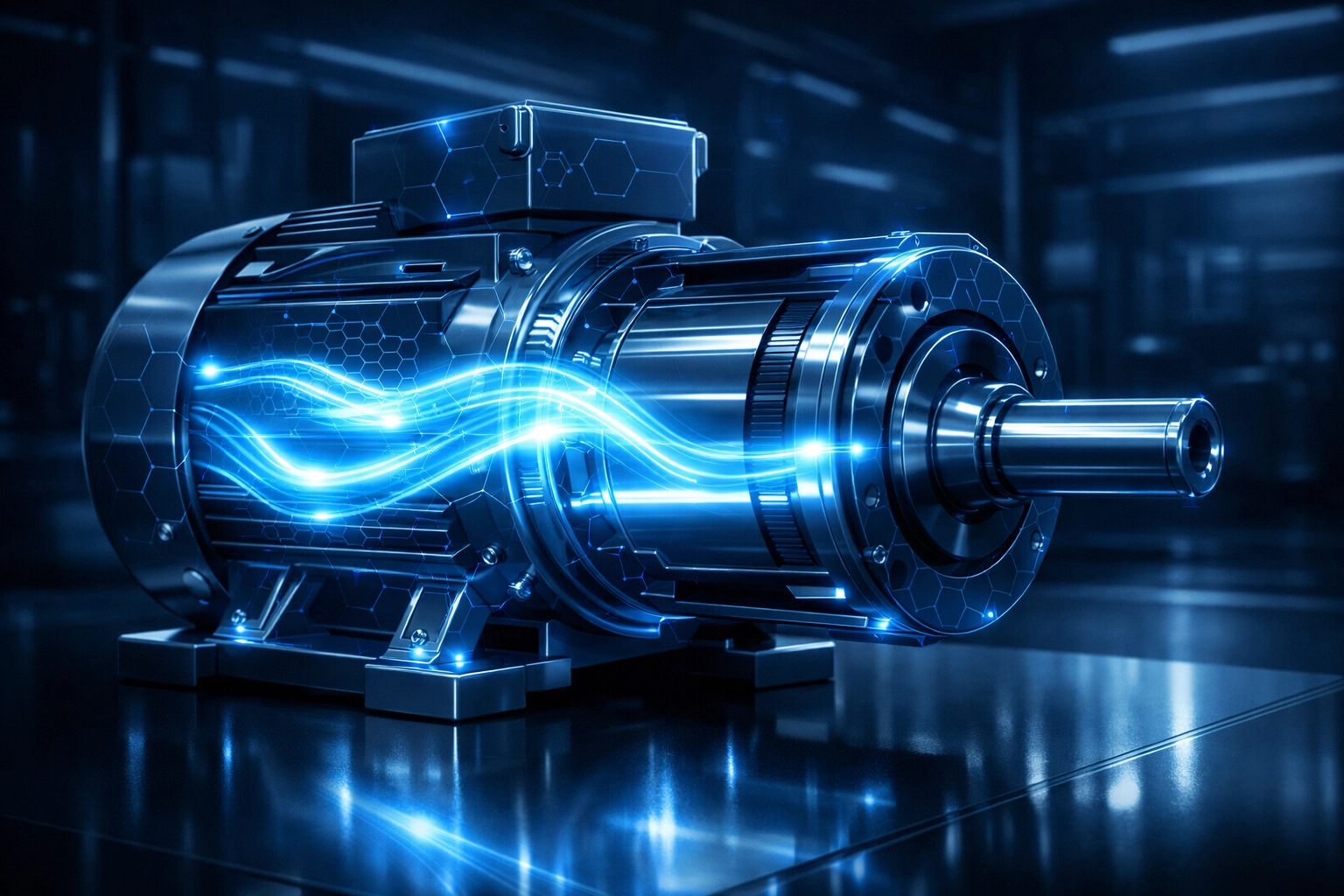
    Industrial motor with glowing energy flow lines illustrating AI-driven energy management and operational efficiency.

    The Implementation Roadmap: 5 Steps to ROI

    If you’re starting from scratch or looking to upgrade your current stack, follow this logic.

    Step 1: Asset Criticality Ranking

    Don’t put sensors on everything. It’s a waste of capital. Focus on the “Bad Actors”: the 20% of machines that cause 80% of your headaches. Turbines, high-pressure pumps, and large compressors are usually the primary targets.

    Step 2: Bridge the IT/OT Gap

    Your maintenance data (OT) needs to talk to your business software (IT). Successful companies in 2026 have moved away from data silos. The insights from the factory floor should be visible to the finance team and the procurement department.

    Step 3: Deploy Real-Time Sensors

    Manual inspections are snapshots. They miss the “intermittent” issues. You need continuous, real-time monitoring. Our systems provide 73% less downtime specifically because we catch those early-stage faults that occur between manual rounds.

    Step 4: Move to the Edge

    In 2026, we don’t send all data to the cloud. It’s too slow and expensive. We use Edge Computing to process the heavy lifting (like Fast Fourier Transforms for vibration) right at the machine. Only the “insights” go to the dashboard.

    Step 5: Close the Loop with Agentic AI

    The final step is integration. When the AI detects a fault, it should automatically check your inventory for the spare part and draft a work order in your CMMS. This is where the real “magic” happens.

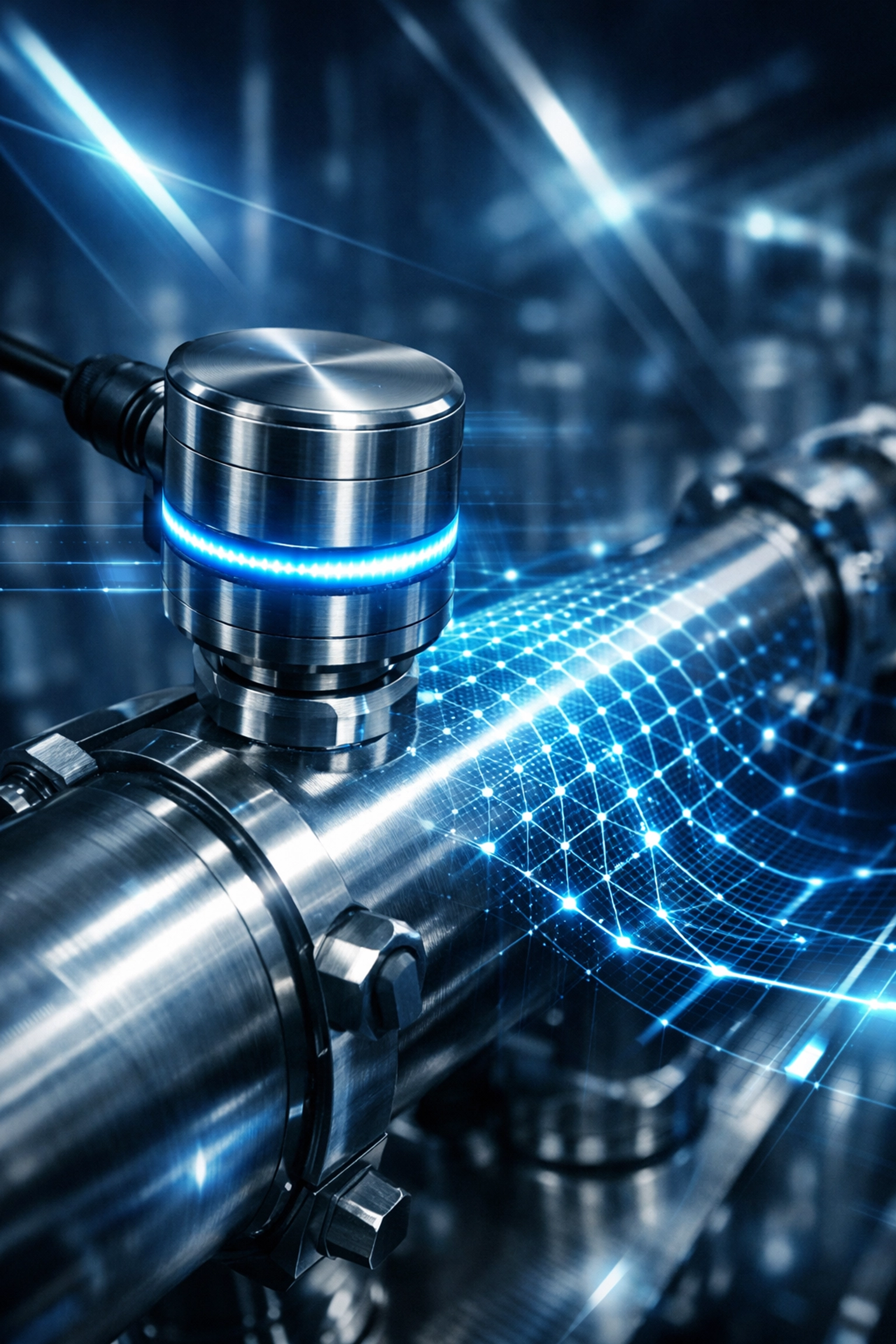
    Advanced industrial sensor on a pipe monitoring real-time data for automated predictive maintenance alerts.

    Understanding the P-F Curve

    To lead in this space, you must understand the P-F Curve (Point of Failure).

    1. The P Point: This is the earliest point where a failure can be detected using advanced sensors (vibration, ultrasound).
    2. The F Point: This is when the machine actually stops working.
    3. The Lead Time: The distance between P and F.

    The goal of IQ Energy AI is to move the “P” as far to the left as possible. We provide “early fault detection” that gives your team weeks: sometimes months: of lead time. This allows for planned, calm interventions rather than panicked repairs.

    Case Study Perspective: Beyond the Tech

    I’ve seen this work in the toughest environments: steel mills, cement plants, and water treatment facilities. In one instance, a large-scale manufacturing plant was losing $50,000 per hour of unplanned downtime.

    By implementing our predictive sensors, they identified a cooling pump bearing failure 14 days before it would have seized. They scheduled the repair for a Sunday shift when production was already low.

    • Cost of parts: $1,200.
    • Cost of downtime: $0.
    • Energy saved: The pump was drawing 15% more power due to the friction of the failing bearing.

    You can explore similar results in our case studies section.

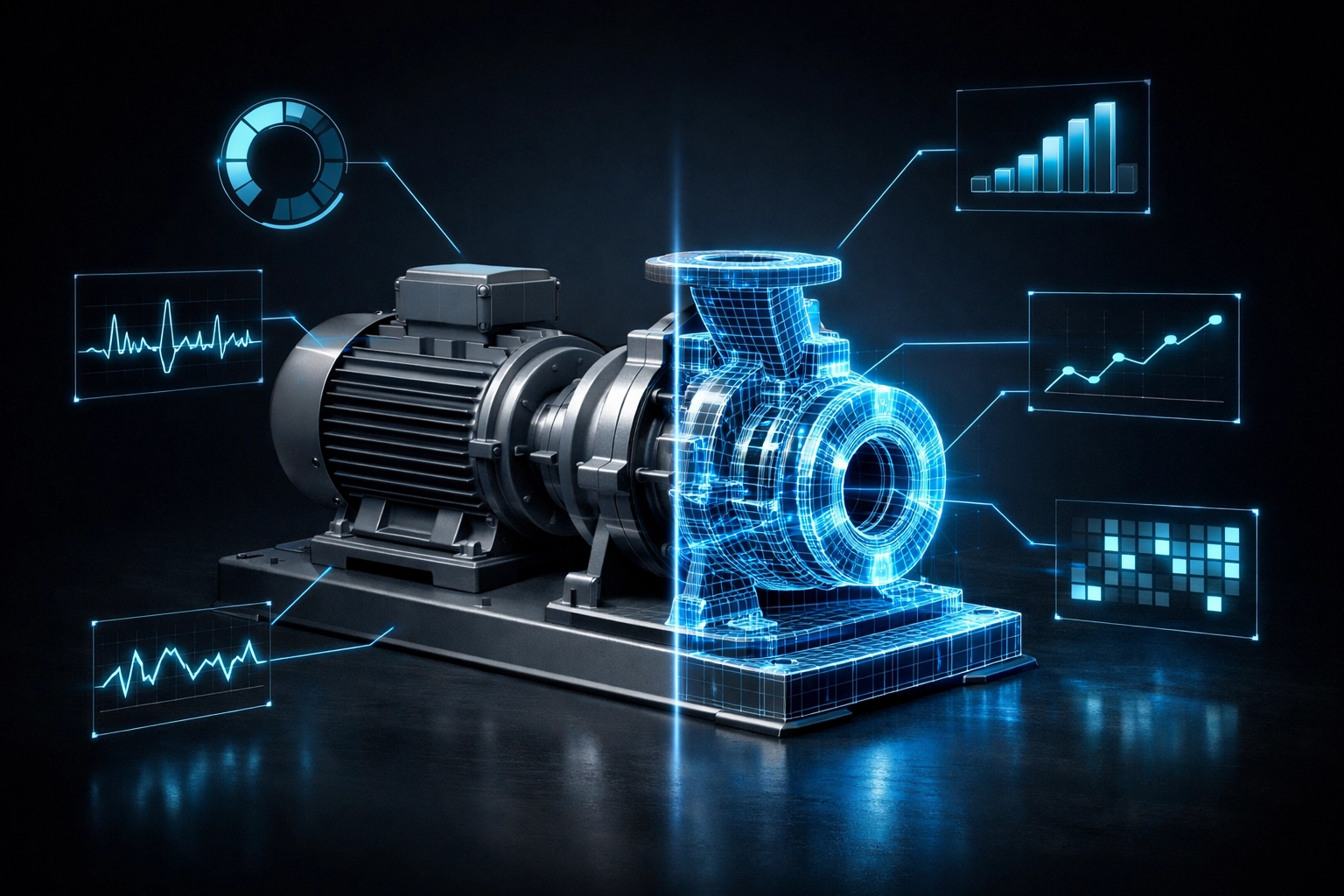
    Digital twin of an industrial pump showing real-time health monitoring and predictive failure analysis.

    The ROI of Doing Nothing

    What happens if you stay the course with traditional maintenance?

    • Energy Creep: Your machines will slowly become less efficient, and your power bills will rise by 5-10% annually without you noticing.
    • Safety Risks: Catastrophic failures are dangerous. Predictive maintenance is a safety strategy as much as a financial one.
    • Talent Loss: The best reliability engineers in 2026 want to work with AI tools, not paper clipboards.

    Final Thoughts: The Path Forward

    The “Ultimate Guide” isn’t just about the technology: it’s about the mindset. You have to stop viewing maintenance as a “fix-it” department and start viewing it as a “data-driven uptime” department.

    The technology is ready. The accuracy is there. The cost reductions are proven.

    If you’re ready to see how this looks in your specific facility, I recommend checking out our pricing models or registering for a live demo.

    The machines are talking. It’s time you started listening.