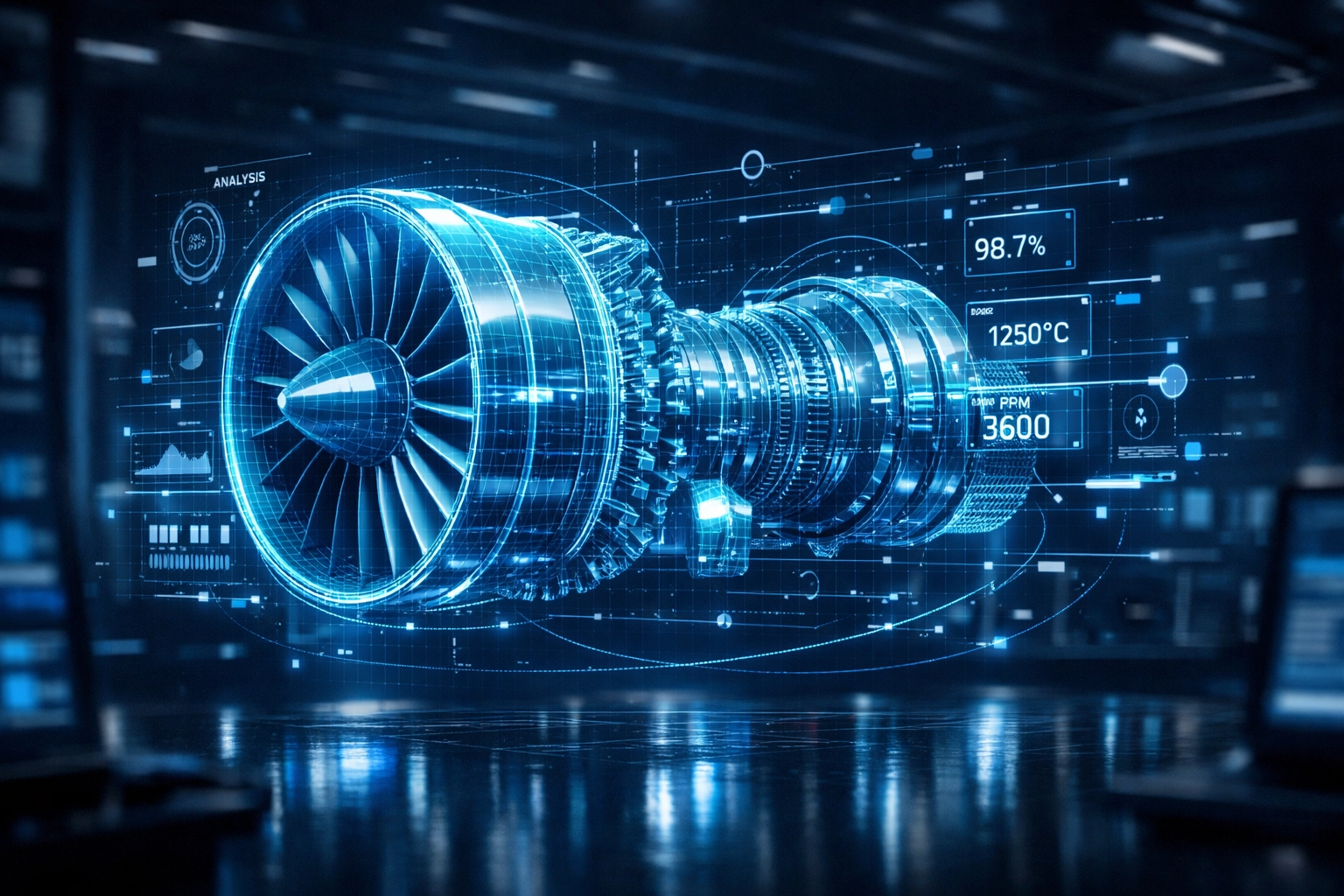
![[HERO] AI Predictive Maintenance vs. Reactive Repairs: Why Waiting for Failure is Costing You 42%](https://cdn.marblism.com/U8I-GYSWFU9.webp)
“If it ain’t broke, don’t fix it.”
In the world of industrial energy management, this is perhaps the most expensive lie ever told. It sounds pragmatic. It sounds like common sense. In reality, it is a financial anchor dragging down your bottom line.
When a critical pump fails at 3:00 AM on a Tuesday, you aren’t just paying for a repair. You are paying for a ransom. You are paying for emergency contractor fees, overnight shipping on parts that should have been in stock, and: most importantly: the deafening silence of a production line that has ground to a halt.
Research shows that reactive maintenance costs between 42% and 60% more than a planned intervention. At IQ Energy AI, we’ve seen this play out in real-time across global markets. Waiting for failure isn’t a strategy; it’s a gamble. And the house always wins.
The $260,000-per-Hour Ransom Note
Let’s talk numbers. Statistics for industrial operations show that unplanned downtime averages roughly $260,000 per hour. In heavy process industries, that number can skyrocket to over $2 million per hour.
When you operate under a reactive maintenance model, you are essentially letting your equipment decide your schedule. Your machines don’t care about your quarterly targets or your weekend plans. They fail when they are pushed too hard, and they fail in ways that maximize disruption.
A scheduled repair is a surgical strike. It’s fast, it’s controlled, and it costs 3 to 4 times less than an emergency fix. When you wait for the “bang,” you lose control. You lose money. You lose sleep.

The 42% Tax on Ignorance
Why is reactive maintenance so much more expensive? It’s the “hidden” costs that get you.
- Labor Premiums: Emergency repairs require technicians to work overtime. You’re paying 1.5x to 2x the standard rate for the same set of hands.
- Logistics Nightmares: Parts are ordered with “Next Day Air” labels. You are paying for the speed of the plane, not just the quality of the gear.
- Collateral Damage: Machines rarely fail in a vacuum. A bearing failure that could have been fixed for $500 can easily cascade into a shaft misalignment or a motor burnout that costs $50,000.
- Energy Inefficiency: Before a machine fails, it struggles. It draws more power. It runs hotter. It vibrates. A machine on the verge of breakdown is an energy vampire, sucking your profits long before it finally dies.
By shifting to a predictive model, you aren’t just preventing a breakdown; you are eliminating the “failure tax.”
IQ Energy AI: The 99.2% Advantage
Predictive maintenance is only as good as the data behind it. If your sensors are crying wolf every five minutes, your team will eventually ignore them. This is where IQ Energy AI changes the game.
Our platform doesn’t just guess. We deliver a 99.2% prediction accuracy.
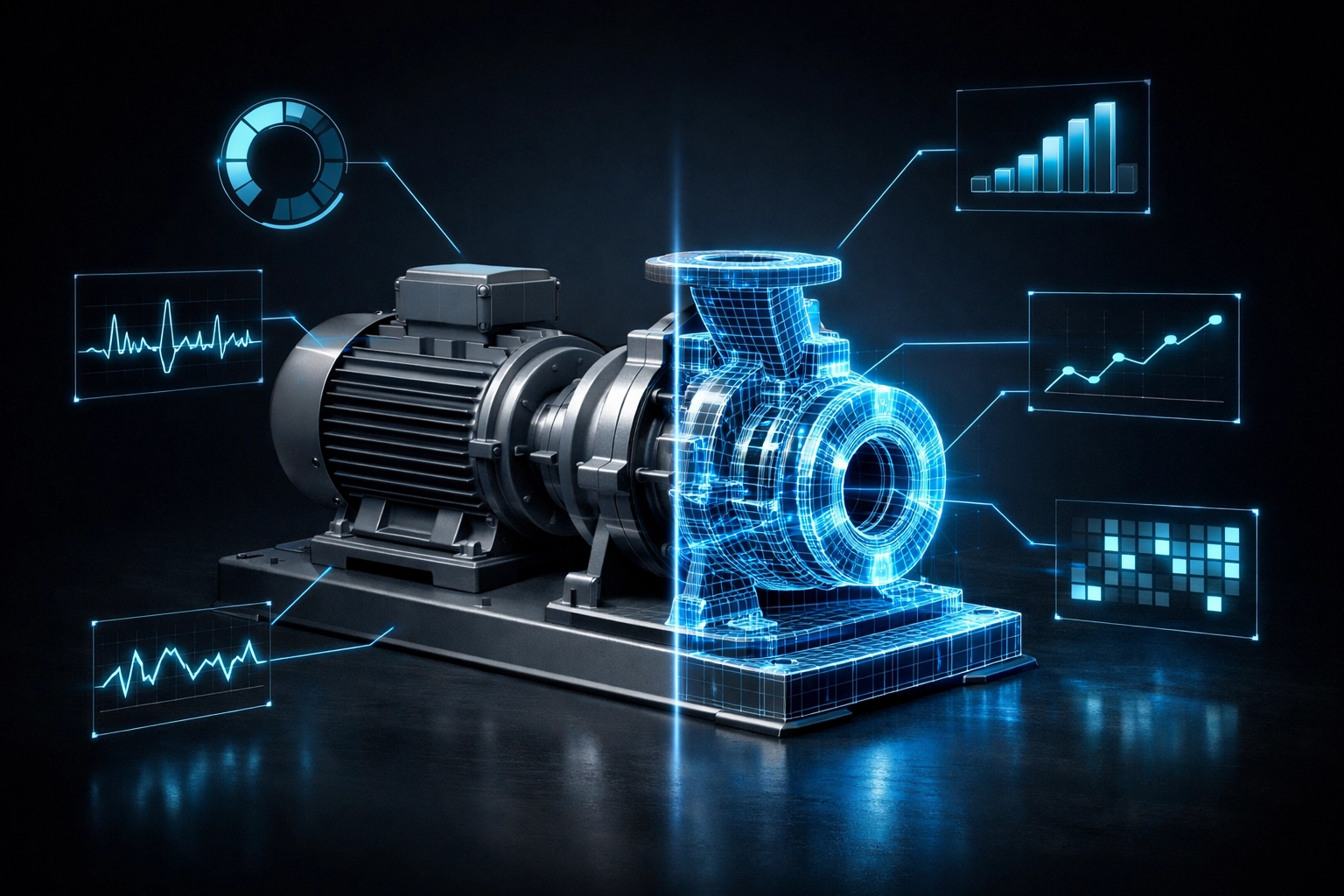
We achieve this by moving beyond simple threshold alerts. Most legacy systems tell you when a machine is hot. We tell you when a machine is becoming hot in a way that deviates from its digital twin’s optimal performance profile. We look for the “fingerprints” of failure weeks before they manifest as smoke or noise.
The result? A 73% reduction in downtime. Imagine reclaiming nearly three-quarters of the time your plant currently spends sitting idle. That isn’t just an incremental improvement; it’s a total transformation of your operational efficiency.

The Global Pressure Cooker: US and European Markets
If the financial incentive isn’t enough to move the needle, the regulatory environment will be.
In Europe, the European Green Deal is no longer a set of “nice-to-have” suggestions. It is a roadmap for mandatory industrial efficiency. Energy waste is being taxed, regulated, and scrutinized. If your plant is running inefficiently because of poorly maintained assets, you are literally leaking money into the hands of regulators.
Similarly, the adoption of ISO 50001 standards has become a benchmark for excellence in both the US and Europe. ISO 50001 requires organizations to establish systems and processes to improve energy performance. You cannot manage what you do not measure, and you certainly cannot optimize what you do not predict.
IQ Energy AI provides the data backbone needed to satisfy these rigorous standards. By maintaining assets at peak performance, you reduce your carbon footprint and ensure your energy consumption remains within the strict limits defined by modern environmental policy.
Why “Predictive” is the New “Pragmatic”
I’ve spent years looking at factory floors, and I can tell you this: the busiest maintenance teams are often the least efficient. They are the ones constantly “putting out fires.” They wear their exhaustion as a badge of honor.
But the most profitable plants? They are quiet.
In a predictive environment, there are no fires to put out. There are only scheduled tasks.
- Monday 9:00 AM: AI flags a vibration anomaly in Pump 4.
- Wednesday 2:00 PM: During a scheduled shift change, a technician spends 20 minutes replacing a $40 seal.
- Thursday: Production continues at 100% capacity.
That is the power of a 99.2% accuracy rate. It turns chaos into a calendar. It turns a $260,000-per-hour disaster into a routine maintenance ticket.

Calculating the ROI: It’s Not Just About Savings
Many COOs ask me about the “cost” of implementing AI. I tell them to look at the “cost” of not implementing it.
The U.S. Department of Energy notes that predictive maintenance can yield a 10x return on investment. For a facility with a $10 million asset base, moving from reactive to predictive can save upwards of $350,000 annually in pure maintenance costs: not even counting the reclaimed production revenue.
At IQ Energy AI, we focus on Asset Performance Optimization. We aren’t just helping you fix things; we are helping you run better.
Check out our case studies to see how we’ve helped industrial leaders stop the bleeding. The data is clear: companies that embrace AI-driven maintenance see a 20-25% boost in total production.
The Uncomfortable Truth
The truth is that most industrial leaders are afraid of the complexity of AI. They think it requires a PhD to run or a total overhaul of their existing infrastructure.
It doesn’t.
Our system is designed to integrate with your current setup. It’s about layering intelligence over your existing hardware. You don’t need to replace your machines; you just need to start listening to them.
Waiting for a machine to fail is like waiting for your car’s engine to explode before you change the oil. It’s not “saving money.” It’s deferred disaster.

Take Control of Your Energy Future
The 42% price tag on reactive repairs is a choice. You can choose to pay it, or you can choose to invest in a system that pays you back.
With 99.2% accuracy and a 73% reduction in downtime, IQ Energy AI is the tool that moves your operation from the 20th century into the 21st. The European Green Deal is coming. ISO 50001 is the new standard. Your competitors are already looking at their data.
Are you ready to stop reacting and start predicting?
Visit our demo page to see how we can transform your maintenance strategy from a cost center into a competitive advantage. Or, if you’re ready to dive into the technical details, explore our documentation.
The machines are talking. It’s time you started listening.
![[HERO] Energy Optimization Software Vs. Manual Tuning: Which Is Better For Your Asset Performance?](https://cdn.marblism.com/SOD_ofdp58r.webp)


![[HERO] Why AI Predictive Maintenance Will Change the Way You Think About Downtime](https://cdn.marblism.com/F8wHw2ESMAF.webp)


![[HERO] Equipment Failure Prediction Secrets Revealed: How to Move from Alerts to Action](https://cdn.marblism.com/AwyHpfqASTr.webp)


![[HERO] Why an Industrial Energy Management System Will Change the Way You Hit Sustainability Goals](https://cdn.marblism.com/TejtICSGLoD.webp)


![[HERO] The Ultimate Guide to AI Predictive Maintenance: Everything You Need to Succeed in 2026](https://cdn.marblism.com/yCeG-9Ryn7l.webp)